Slot (or expansion slot): In computers, a slot, or expansion slot, is an engineered technique for adding capability to a computer in the form of connection pinholes (typically, in the range of 16 to 64 closely-spaced holes) and a place to fit an expansion card containing the circuitry that provides some specialized capability, such as video.
An expansion card is an electronic circuit board that adds more functionality to a desktop computer. These cards are installed into the expansion slot of a computer motherboard, and they allow the computer to perform additional functions not offered by the motherboard. Video cards and sound cards are common examples: a new video card added will enhance the three dimensional graphics processing power of a computer while a new sound card may improve a computer’s audio input.
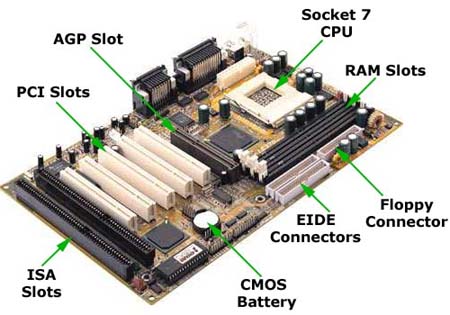
There are alternative terms used for this type of card, and it is also known as expansion board, add-on card, interface adapter or an internal card. Generally, between one and seven expansion cards can be installed into the desktop computer system. Laptops do not use standard cards due to their small form factor, although they can often accept a removable PCMCIA card that offers additional functions.
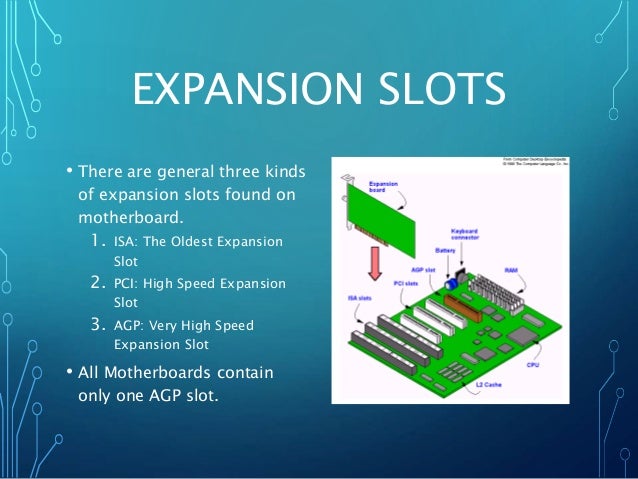
Isa Expansion Slot
The Altair 8800, developed in the mid 1970s, was the first microcomputer to add an expansion card bus. In 1981, IBM® launched its first PC with an XT bus, which was later replaced with a 16-bit ISA. The introduction of the PCI bus in 1991 resulted in modern forms of interface adapters that provided additional benefits beyond enhanced graphics and sound.